
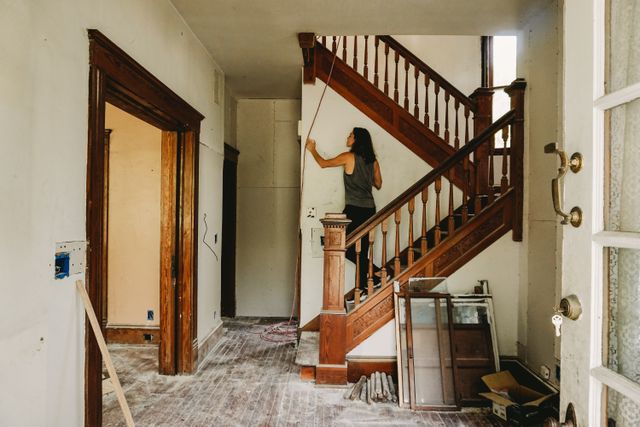
There is a familiar smell that greets many people when they walk into an older home. It may be musty, earthy, stale, or slightly sweet. Some call it the smell of an old house, but age alone does not create that distinctive odor. In many cases, the smell is a clue that something in the home deserves a closer look.
🏠 So, What Are You Actually Smelling?
That old-house smell is often a combination of airborne compounds released by building materials, household contents, and microorganisms.
One common contributor is microbial volatile organic compounds (MVOCs). These are gases produced by certain microorganisms, including mold, as they grow. Some can have a musty or earthy odor.
Other sources include:
- Moisture and microbial growth: Damp basements, crawl spaces, wall cavities, and areas around plumbing leaks can harbor mold and other microorganisms.
- Aging materials: Old wood, deteriorating adhesives, carpet padding, and certain finishes can release odors as they break down.
- Dust and accumulated debris: Decades of dust, pet dander, cooking residue, and other particles can settle into carpets, upholstery, and wall cavities.
- Poor ventilation: When indoor air does not circulate well, odors can build up instead of being diluted and carried away.
Often, the smell comes from several sources working together rather than one obvious problem.
💧 Why Older Homes Can Have a Stronger Smell
Older homes may have stone or block foundations, unfinished basements, crawl spaces, aging plumbing, or ventilation systems that do not manage moisture effectively.
In Northwest Ohio, seasonal humidity, spring rains, and changing temperatures can make moisture control especially important. Water can enter through foundation cracks, seep into basement materials, or collect in poorly ventilated spaces. Even a small, long-standing moisture problem can contribute to persistent odors.
A home can look clean and well-maintained while concealing moisture behind finished walls, beneath flooring, or under insulation.
🔎 What Can You Do About It?
Before reaching for an air freshener, try to identify the source.
Start with these practical steps:
- Check the basement and crawl space. Look for damp surfaces, water staining, efflorescence (white mineral deposits), and visible microbial growth.
- Inspect around plumbing and windows. Look for leaks, condensation, soft materials, and discoloration.
- Check the HVAC system. Inspect accessible filters, drain pans, and condensate lines for moisture or accumulated debris.
- Improve moisture control. Correct leaks, direct downspouts away from the foundation, and maintain appropriate indoor humidity.
- Investigate persistent odors. If the smell remains, consider a qualified home inspection or an appropriate moisture and mold assessment.
The Bottom Line
That distinctive old-house smell is not simply the scent of history. It may come from aging materials and accumulated dust, but persistent mustiness can also signal excess moisture or hidden microbial growth.
The goal isn’t to make the smell disappear temporarily. It’s to understand what is causing it. A home that smells fresh because the underlying problem has been corrected is far better than one that simply smells fresh because the problem has been covered up.
Recent Comments